Step into the delightful world of Belgian waffles, and you’ll quickly discover that not all waffles are created equal. Beyond the generic “Belgian waffle” often found on menus abroad, Belgium proudly boasts two distinct culinary masterpieces: the Liege waffle and the Brussels waffle. Each offers a unique experience, a testament to the rich culinary traditions of their namesake cities. Understanding their fundamental differences is key to appreciating these iconic treats and choosing the perfect one for your palate, or even your waffle maker.
An Overview of Belgian Waffles: More Than Just a Treat
Waffles, in their many forms, have charmed taste buds for centuries, evolving from simple griddle cakes to the sophisticated delights we know today. While the term “Belgian waffle” is widely used, particularly in North America, it often refers to a lighter, crispier style with deep pockets, more closely resembling the Brussels waffle. However, to truly appreciate Belgian waffle culture, one must delve into the specific characteristics that define both the Liege and Brussels varieties. These aren’t just minor variations; they represent distinct approaches to dough, texture, and flavor, each requiring different preparation techniques and best enjoyed in their own unique ways.
Dissecting the Differences: Liege vs. Brussels Waffles
The heart of the Belgian waffle debate lies in the stark contrasts between the Liege and Brussels styles. From their historical roots to their preferred serving methods, these two waffles offer a fascinating study in culinary diversity.
Origins and Evolution
|
Our Picks for the Best Waffle maker in 2026
As an Amazon Associate I earn from qualifying purchases.
|
||
| Num | Product | Action |
|---|---|---|
| 1 | Dash No-Drip Waffle Maker - Quad Waffle Maker for Hassle-Free Breakfasts - Dual Nonstick Heating Plates & Quick Heat-Up System - Easy-Release Surface - Silver |

|
| 2 | OSTBA Waffle Maker, 2 Slice Non-Stick Waffle Iron, Belgian Waffle Machine with Indicator Lights, PFOA Free, Perfect for Breakfast and Snacks, 750W |
|
| 3 | bella Classic Rotating Belgian Waffle Maker with Nonstick Plates, Removable Drip Tray, Adjustable Browning Control and Cool Touch Handles, Black |
|
| 4 | KRUPS 4-Slice Belgian Waffle Maker: Stainless Steel, 5 Browning Levels, Audible Ready Beep, Removable Plates, 1200W, Silver/Black, Large Waffle Maker Family Size, Great for Family Breakfasts |
|
| 5 | Cuisinart Waffle Maker, 1250W Round Classic Waffle Iron, 5-Setting Adjustable Browning Control, WMR-CANAS, Brushed Stainless |
|
| 6 | Dash Mini Waffle Maker- Compact Electric Iron for Creative Homemade Treats - Nonstick Surface - Easy-to-Clean - Perfect for Kids & Families - Aqua |
|
| 7 | Elite Gourmet EWM015MX Electric Nonstick 4.5-inch Mini Waffle Maker, Belgian Waffles, Compact Design, Hash Browns, Keto, Snacks, Sandwich, Eggs, Easy to Clean, Mint |
|
| 8 | Cuisinart Round Flip Belgian Waffle Maker, Black/Silver, 1 inch thick, WAF-F30NAS |
|
| 9 | Cuisinart Waffle Maker, 1250W Round Classic Waffle Iron, 5-Setting Adjustable Browning Control, WMR-CAP2, Brushed Stainless |
|
| 10 | Waffle Maker, Rotating Belgian Waffle Maker, 180° Flip Waffle Iron, Non-Stick Plate, Adjustable Browning Control, Foldable Cool Touch Handle, Removable Drip Tray, Space Saving Storage, Stainless Steel |
|
The Liege waffle (Gaufre de Liège) is steeped in history, said to have been invented in the 18th century by the cook of the Prince-Bishop of Liège. The Prince reportedly desired “something sweet and tasty,” leading to the creation of this rich, dough-based waffle. It has since become a staple street food, beloved for its grab-and-go convenience and inherent sweetness.
The Brussels waffle (Gaufre de Bruxelles), while perhaps less dramatically storied in its origin, is equally iconic. It is often associated with more formal café settings, offering a sophisticated canvas for a myriad of toppings. Its lighter, airier structure speaks to a different culinary philosophy, one focused on delicate crispness and versatility.
The Batter and Key Ingredients
The most significant distinction between these two waffles lies in their fundamental recipes.
The Liege waffle starts with a thick, brioche-like yeast dough, similar in consistency to bread dough. Key ingredients include flour, butter, eggs, milk, yeast, and crucially, Belgian pearl sugar. These irregular lumps of sugar are folded into the dough before cooking, caramelizing as the waffle bakes, creating pockets of crunchy sweetness throughout.
In contrast, the Brussels waffle is made from a lighter, more liquid yeast-leavened batter. Its ingredients typically include flour, butter, eggs, milk, yeast, and vanilla sugar. It lacks the pearl sugar found in its Liege counterpart, resulting in a more neutral base flavor that readily absorbs other tastes. This difference in batter consistency also dictates the type of waffle iron best suited for each.
Shape, Texture, and Appearance
Visual and textural cues offer immediate clues to distinguish between the two.
Liege waffles are typically smaller, denser, and have an irregular, often oval or rounded shape with uneven edges. They are thick and chewy, with a rich, soft interior that contrasts beautifully with the caramelized, crunchy exterior. A classic Liege waffle often features a 4×6 waffle imprint, yielding 24 holes. The golden-brown crust, dotted with glistening, caramelized pearl sugar, is instantly recognizable.
Brussels waffles, on the other hand, are larger, lighter, and distinctly rectangular. They possess well-defined, crisp edges and deeper pockets, traditionally featuring a 4×5 or 3×5 grid pattern. Their texture is a delightful contradiction: crispy on the outside, yet wonderfully light and fluffy within. This airy structure is a hallmark of their yeast-leavened batter.
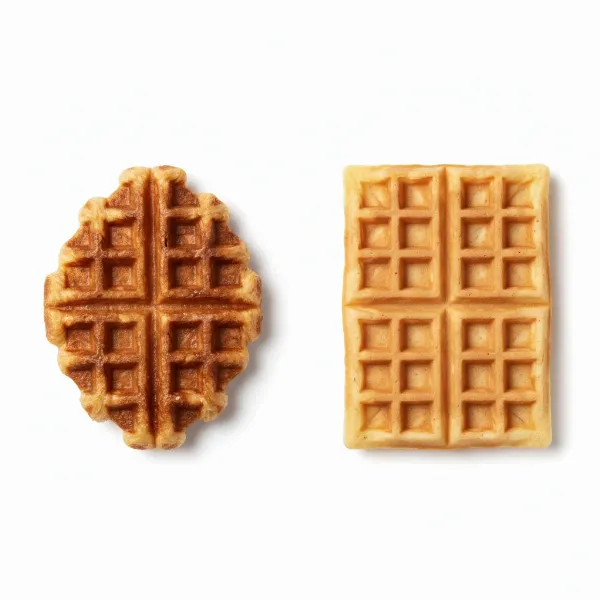 Visual comparison of Liege waffle's irregular shape and pearl sugar versus Brussels waffle's crisp rectangle.
Taste Profile and Serving Suggestions
How these waffles are traditionally enjoyed further highlights their differences.
The Liege waffle is inherently sweet and rich, often flavored with vanilla or cinnamon. Thanks to the integrated pearl sugar, it is designed to be enjoyed plain, straight from the iron. It’s a complete treat on its own, served warm or even cold, making it a popular takeaway snack in Belgium. While toppings are sometimes added, particularly for tourists or outside of Belgium, purists often prefer it unadorned to fully appreciate its unique flavor and texture.
The Brussels waffle has a more neutral, less sweet taste, primarily flavored with vanilla. Its airy nature and deep pockets make it the perfect vehicle for an array of toppings. Traditionally, it’s dusted with powdered sugar, but it truly shines when adorned with fresh fruits, generous dollops of whipped cream, chocolate sauce, or even a scoop of ice cream. Best enjoyed hot, the Brussels waffle’s crispness fades as it cools, making it an ideal sit-down dessert rather than a handheld snack. Surprisingly, it can also be a delicious base for savory toppings like salmon or ham, showcasing its versatility.
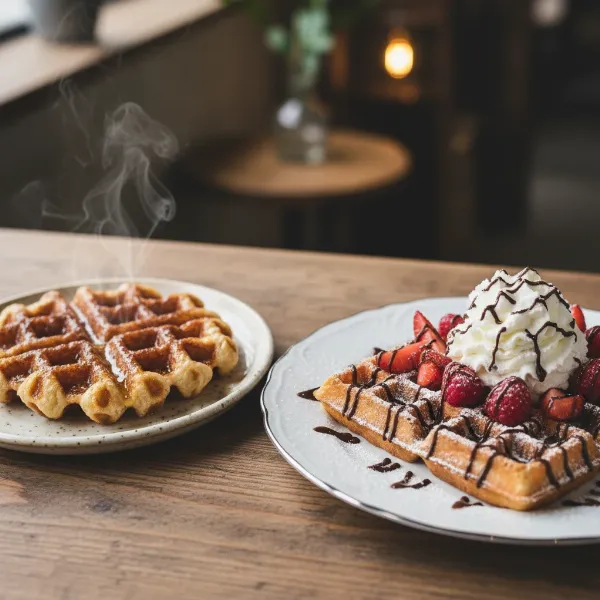 Liege waffle served plain and Brussels waffle topped with fruits and whipped cream.
Waffle Iron Requirements
Choosing the right waffle maker is essential to achieving authentic results for each type.
For Liege waffles, a sturdy waffle maker with deeper grids is beneficial to accommodate the thick, doughy batter and ensure proper caramelization of the pearl sugar. While various types of irons can work, some models feature deeper pockets specifically designed for these dense, chewy treats.
The Brussels waffle, with its liquid batter, benefits greatly from a rotary waffle maker. This design allows for an even distribution of the batter across the grids, ensuring a consistent, airy, and crispy texture on both sides. Waffle irons with a 3×5 or 4×5 grid pattern are typically used for Brussels waffles, yielding their characteristic rectangular shape and deep pockets.
Choosing Your Perfect Waffle: A Buyer’s Guide Perspective
When selecting a waffle maker, your preference for Liege or Brussels waffles significantly influences your choice. Investing in the right machine ensures you can recreate these authentic Belgian delights at home.
Waffle Iron Type
Consider the mechanics: a rotary waffle maker is highly recommended for Brussels waffles, as it helps distribute the thin batter evenly, promoting uniform crispness. For Liege waffles, while a rotary model isn’t strictly necessary, an iron with deeper grid plates is advantageous to handle the thicker dough and allow the pearl sugar to caramelize effectively without sticking excessively.
Material & Features
Non-stick surfaces are paramount for both types, but especially for Liege waffles where caramelized sugar can adhere stubbornly. Look for durable coatings like ceramic or high-quality non-stick. Adjustable temperature control is a valuable feature, allowing you to fine-tune the heat for optimal browning and crispness. Higher heat is often needed for Liege waffles to properly caramelize the sugar, while Brussels waffles benefit from consistent, medium-high heat for their airy texture.
Size & Capacity
Waffle makers come in various sizes, from single-serve to models that produce multiple waffles simultaneously. Consider your typical needs: a larger iron might be suitable for family breakfasts or entertaining, while a compact model is perfect for individual servings or limited kitchen space. Brussels waffles tend to be larger, so ensure your waffle maker can accommodate their generous size.
Brand & Price
Research reputable brands known for quality waffle makers. While higher-priced models often boast superior construction and features, excellent options exist across all price points. Read reviews focusing on ease of use, durability, and how well they produce both crispy and doughy waffle types.
Master Your Waffle: Usage and Care Tips
Proper usage and maintenance extend the life of your waffle maker and guarantee delicious results every time.
Preheating is crucial. Always allow your waffle iron to fully preheat before adding batter or dough. This ensures an even cook and prevents sticking. For Liege waffles, cook times can be slightly longer due to the denser dough, and the caramelizing sugar requires careful monitoring to avoid burning. For Brussels waffles, aim for a golden-brown crispness without overcooking, which can lead to dryness.
Cleaning should be done after the iron has cooled. For Liege waffles, any caramelized sugar residue can be particularly stubborn. Use a damp cloth or a soft brush for basic cleaning. Avoid abrasive scrubbers that could damage the non-stick coating. For deeply stuck bits, a wooden or silicone utensil can gently lift them. Regular cleaning ensures your waffle maker is always ready for your next culinary adventure.
Simple Waffle Recipes to Try at Home
Embarking on your waffle-making journey can be incredibly rewarding. The fundamental difference in their core recipes — a thick, yeasted dough for Liege and a lighter, yeasted batter for Brussels — guides the entire cooking process. For Liege waffles, focus on kneading a robust dough and carefully incorporating the pearl sugar. For Brussels waffles, mastering the yeast-leavened, flowing batter is key to achieving that signature airy crispness. You’ll find countless recipes available online to guide you, encouraging you to experiment and discover which style truly captures your heart.
Conclusion
The delightful world of Belgian waffles offers a distinct choice between the rich, chewy, and sweet Liege waffle and the light, crispy, and versatile Brussels waffle. Each embodies a unique culinary heritage, from the pearl-sugar infused dough of Liege to the airy, yeast-leavened batter of Brussels. Understanding these differences not only enhances your appreciation for these iconic treats but also empowers you to choose the perfect waffle for any occasion, whether it’s a quick, sweet bite on the go or a grand dessert adorned with all your favorite toppings. So, which will it be? Will you succumb to the irresistible charm of the caramelized Liege, or embrace the delicate crispness of the Brussels?
Frequently Asked Questions
Is a Belgian waffle a Liege or Brussels waffle?
In North America, “Belgian waffle” usually refers to a waffle that resembles the Brussels style: larger, rectangular, and airy with deep pockets. However, in Belgium itself, there are two distinct types—Liege and Brussels—both considered “Belgian waffles.”
Can I make Liege waffles in a standard waffle maker?
Yes, you can make Liege waffles in most standard waffle makers, especially those with deeper grids. However, the pearl sugar may stick if the non-stick coating isn’t robust, and you might need to adjust cooking times for the denser dough.
What is pearl sugar?
Pearl sugar, specifically Belgian pearl sugar (sucre perlé), is a type of coarse, opaque sugar that resists melting completely when baked. It caramelizes on the surface of Liege waffles, creating delightful pockets of crunch and sweetness.
Why are Brussels waffles crispy?
Brussels waffles are crispy due to their light, yeast-leavened batter, which creates air pockets, and their specific cooking method. The yeast contributes to their airy texture, and baking in a hot waffle iron yields a beautifully golden, crunchy exterior.
Can you eat Liege waffles cold?
Absolutely! While Liege waffles are often enjoyed warm to experience the melted pearl sugar, they are also delicious eaten cold. Their dense, chewy texture holds up well, making them an excellent snack that can be prepared in advance.