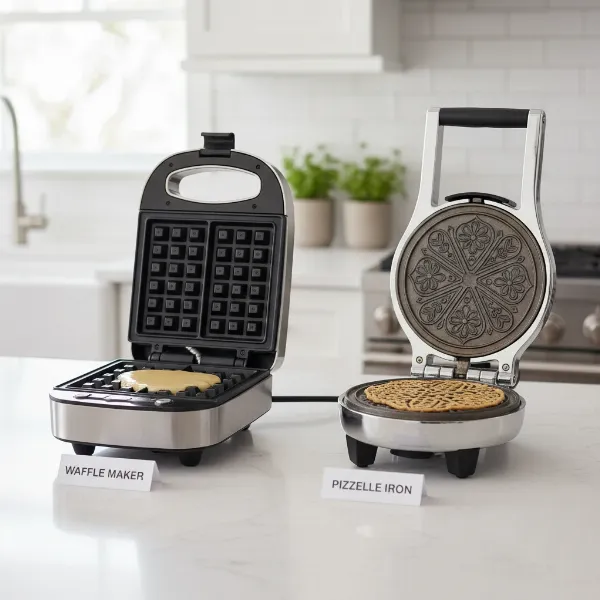
Are you dreaming of golden-brown waffles, crisp on the outside and tender within? Whether you prefer the thick, airy pockets of a Belgian waffle or the thinner, dense texture of a classic American style, the right waffle maker is key to breakfast perfection. Navigating the world of waffle irons can be a delightful challenge, with various designs, features, and styles available. This comprehensive guide will help you understand the nuances between Belgian and classic waffles, their dedicated makers, and what to consider when making your purchase.
An Overview of Waffle Makers
Waffles have a rich history, evolving from ancient Greek flat cakes to the beloved breakfast staple we know today. Over centuries, various regional interpretations have emerged, each with its unique characteristics and, often, its own specialized cooking equipment. Understanding these foundational differences is the first step in choosing your ideal waffle maker.
Decoding Waffle Types
The primary distinction often comes down to two main categories:
- Belgian Waffles: These are typically thicker, larger, and characterized by their distinct deep, square pockets. The batter for authentic Belgian waffles often uses yeast, resulting in a light, airy interior and a wonderfully crispy exterior. Some variations, like Liege waffles, are made from a rich, brioche-like dough infused with pearl sugar, offering a chewier texture and a caramelized crunch. Belgian waffles are designed to hold an abundance of toppings, from fresh fruit and whipped cream to syrup.
- Classic (American) Waffles: In contrast, classic American waffles are generally thinner with shallower, often round, grid patterns. Their texture tends to be denser and more cake-like, commonly made with baking powder or baking soda for leavening, and often enriched with buttermilk for a tangy flavor. These waffles are ideal for soaking up syrup and butter, providing a satisfyingly soft bite.
|
Our Picks for the Best Waffle maker in 2026
As an Amazon Associate I earn from qualifying purchases.
|
||
| Num | Product | Action |
|---|---|---|
| 1 | KRUPS 4-Slice Belgian Waffle Maker: Stainless Steel, 5 Browning Levels, Audible Ready Beep, Removable Plates, 1200W, Silver/Black, Large Waffle Maker Family Size, Great for Family Breakfasts |

|
| 2 | Elite Gourmet EWM015MX Electric Nonstick 4.5-inch Mini Waffle Maker, Belgian Waffles, Compact Design, Hash Browns, Keto, Snacks, Sandwich, Eggs, Easy to Clean, Mint |
|
| 3 | Dash No-Drip Waffle Maker - Quad Waffle Maker for Hassle-Free Breakfasts - Dual Nonstick Heating Plates & Quick Heat-Up System - Easy-Release Surface - Silver |
|
| 4 | Cuisinart Round Flip Belgian Waffle Maker, Black/Silver, 1 inch thick, WAF-F30NAS |
|
| 5 | Dash Mini Waffle Maker- Compact Electric Iron for Creative Homemade Treats - Nonstick Surface - Easy-to-Clean - Perfect for Kids & Families - Aqua |
|
| 6 | bella Classic Rotating Belgian Waffle Maker with Nonstick Plates, Removable Drip Tray, Adjustable Browning Control and Cool Touch Handles, Black |
|
| 7 | Waffle Maker, Rotating Belgian Waffle Maker, 180° Flip Waffle Iron, Non-Stick Plate, Adjustable Browning Control, Foldable Cool Touch Handle, Removable Drip Tray, Space Saving Storage, Stainless Steel |
|
| 8 | Cuisinart Waffle Maker, 1250W Round Classic Waffle Iron, 5-Setting Adjustable Browning Control, WMR-CANAS, Brushed Stainless |
|
| 9 | Cuisinart Waffle Maker, 1250W Round Classic Waffle Iron, 5-Setting Adjustable Browning Control, WMR-CAP2, Brushed Stainless |
|
| 10 | OSTBA Waffle Maker, 2 Slice Non-Stick Waffle Iron, Belgian Waffle Machine with Indicator Lights, PFOA Free, Perfect for Breakfast and Snacks, 750W |
|
Types of Waffle Makers
Just as there are different waffle styles, there are distinct types of waffle makers designed to achieve them:
- Belgian Waffle Makers: These appliances feature deep grids that produce the signature thick waffles with large pockets. Many Belgian waffle makers are “flip” style, meaning you pour the batter, close the lid, and then rotate the cooking plates 180 degrees. This flipping mechanism helps distribute the batter evenly and ensures consistent cooking and browning on both sides. They often create square or rectangular waffles.
- Classic Waffle Makers: Designed for thinner waffles, these makers have shallower grids and typically produce round waffles. They are generally stationary, with a hinged lid that simply closes over the batter. These irons are known for quickly cooking waffles to a golden, crisp finish.
- Convertible/Multi-Waffle Makers: Some versatile models come with interchangeable plates, allowing you to switch between deep Belgian grids and shallower classic grids, or even flat griddle plates for pancakes or sandwiches. These offer flexibility for those who enjoy variety.
The choice between a Belgian and a classic waffle maker largely depends on your preferred waffle style and how you plan to enjoy them. Belgian makers deliver that luxurious, airy texture perfect for decadent brunches, while classic makers offer a quicker cook time for a traditional, comforting breakfast.
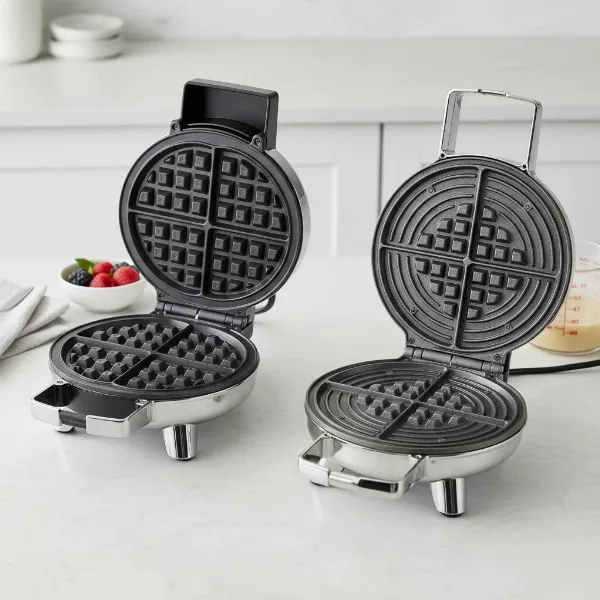 Side-by-side comparison of a Belgian waffle maker and a classic American waffle maker.
Key Factors to Consider When Buying a Waffle Maker
Selecting the perfect waffle maker goes beyond just choosing between deep and shallow pockets. A thoughtful purchase ensures you get an appliance that not only meets your culinary desires but also fits seamlessly into your kitchen routine.
Waffle Maker Type and Grid Depth
The most crucial decision is the type of waffle and, by extension, the grid depth of your maker.
- Deep-Pocketed (Belgian) Makers: If fluffy, thick waffles loaded with toppings are your ideal, a Belgian waffle maker is a must. The deep grids are specifically designed to create those generous pockets. Look for models with a flipping mechanism, which is often touted as essential for achieving evenly cooked Belgian waffles. Flipping ensures the batter spreads throughout the deep grids, leading to uniform thickness and browning.
- Shallow-Pocketed (Classic) Makers: For thin, crispy waffles that soak up syrup beautifully, a classic waffle maker with shallower grids will be your best friend. These are typically faster to cook and result in a denser waffle texture.
- Interchangeable Plates: If you’re a waffle enthusiast who enjoys both styles, or even other griddled items like panini or hash browns, a waffle maker with interchangeable plates offers fantastic versatility. Ensure the plates are easy to swap out and securely lock into place.
Construction Material and Non-Stick Coating
The materials used in a waffle maker impact its performance, durability, and ease of maintenance.
- Cooking Plates:
- Cast Iron: Known for superior heat retention and even heat distribution, cast iron plates can produce exceptionally crispy waffles. They often require seasoning and careful maintenance but are incredibly durable.
- Aluminum: Lighter and quicker to heat up than cast iron, aluminum plates are more common in household waffle makers. They offer good performance but might not retain heat as consistently as cast iron.
- Exterior Housing: Waffle maker exteriors typically come in stainless steel or plastic. Stainless steel often offers a more premium look and greater durability, while plastic models are usually lighter and more budget-friendly. Both can be effective, but look for solid construction.
- Non-Stick Coating: A high-quality non-stick coating (like Teflon or ceramic) on the cooking plates is paramount for easy waffle release and hassle-free cleaning. Without it, waffles can stick, tear, and create a stubborn mess. Ceramic coatings are often preferred for being PFOA-free.
Essential Features and Controls
Modern waffle makers come with a variety of features that enhance convenience and cooking precision.
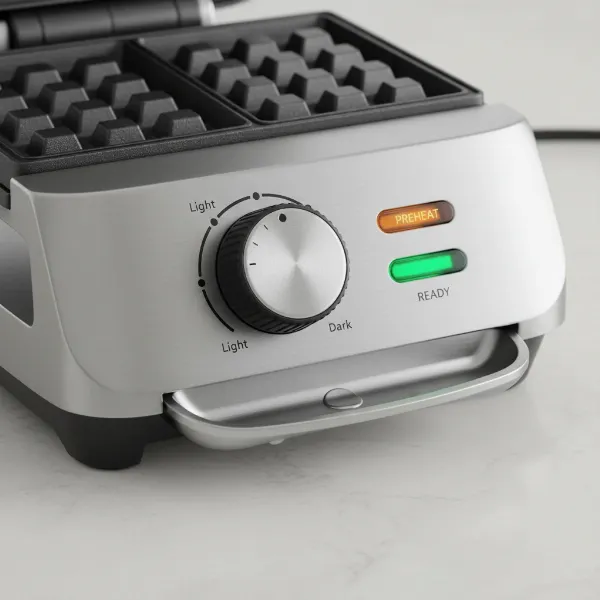 Close-up of a modern waffle maker showing browning controls, indicator lights, and a drip tray.
- Adjustable Temperature/Browning Settings: This allows you to customize your waffles from light and soft to dark and extra crispy. Multiple settings ensure everyone in the household gets their waffle just right.
- Indicator Lights: A “preheat” light lets you know when the iron is hot enough to add batter, and a “ready” light (often with an audible beep) signals when your waffle is cooked to your selected doneness. These are invaluable for consistent results.
- Timers: Some advanced models include integrated timers that count down the cooking process, taking the guesswork out of waffle making.
- Drip Trays/Overflow Channels: Waffle batter expands, and spills happen. A built-in drip tray or overflow channel catches any excess batter, making cleanup significantly easier and preventing messy countertops.
- Cord Storage and Cool-Touch Handles: Practical features like integrated cord storage keep your kitchen tidy, and cool-touch handles ensure safe operation.
Size, Capacity, and Storage
Consider your household size and kitchen space when choosing a waffle maker.
- Capacity: Do you need a single-waffle maker for quick individual breakfasts, a double-waffle maker for couples, or a 4-slice unit for family brunches? Higher capacity machines cook more waffles at once, saving time.
- Footprint: Waffle makers can vary significantly in size. Measure your available countertop and storage space to ensure the appliance fits comfortably when both in use and stored away.
- Waffle Size and Shape: Belgian makers often produce square or rectangular waffles (e.g., 4×7 inches), while classic makers frequently yield 7-inch round waffles. This impacts serving and presentation.
Brand Reputation and Price Range
Investing in a reputable brand often means better quality, reliability, and customer support.
- Trusted Brands: Companies like Cuisinart, Breville, Hamilton Beach, and Ninja are well-regarded in the kitchen appliance market and offer a range of waffle makers. Researching user reviews can provide insights into specific models.
- Price: Waffle makers range from budget-friendly options under $50 to premium models exceeding $200. While cheaper models can certainly make good waffles, higher-priced units often offer more durable construction, advanced features, and more consistent performance. Consider your budget alongside the features most important to you.
Top Waffle Maker Models: A Comparative Look
To help you visualize the differences and features, here’s a comparative overview of popular waffle maker types, showcasing a mix of Belgian and Classic options.
| Feature / Model | Cuisinart WAF-F4 Double Flip Belgian | Breville BWM640XL Smart 4 Slice Waffle Maker | Cuisinart WMR-CA Classic Waffle Maker | Ninja BW1001 NeverStick PRO Belgian |
|---|---|---|---|---|
| Waffle Type | Belgian (Deep Pockets) | Belgian (Deep Pockets) | Classic (Shallow Pockets) | Belgian (Deep Pockets) |
| Flipping Mechanism | Yes | No (Smart Sensor) | No | No |
| Capacity | Two waffles simultaneously | Four waffles simultaneously | One waffle | One waffle |
| Shape | Round/Square options | Square | Round | Square |
| Browning Control | 6 settings | 12 settings, specific batter settings | 5 settings | Yes, multiple settings |
| Indicator Lights | Ready lights | LCD display, ready indicator | Ready light | Ready light |
| Non-Stick Surface | Yes | Yes | Yes | NeverStick Ceramic |
| Removable Plates | No (but non-stick for easy clean) | No | No | No (but advanced non-stick) |
| Drip Tray/Moat | Yes | Yes (wrap-around moat) | No (but minimal overflow) | Yes |
| Key Differentiator | Double-sided, flip for perfect waffles | Smart settings, even heating | Compact, fast, budget-friendly | Durable non-stick, compact |
Note: Prices and exact specifications can vary, so always check the latest model details before purchasing.
“The best waffle maker isn’t just about the brand; it’s about how its design supports the specific waffle style you love and the features that make your cooking experience enjoyable and consistent.” – Chef Eleanor Vance, Culinary Equipment Specialist
Using and Maintaining Your Waffle Maker for Perfect Waffles
Having the right waffle maker is only half the battle; knowing how to use and care for it ensures a lifetime of delicious waffles.
Steps for Perfect Waffles Every Time
- Preheat Thoroughly: Always preheat your waffle maker completely before adding batter. Most models have an indicator light that signals when it’s ready. This is crucial for crisp exteriors and even cooking.
- Grease Sparingly (If Needed): Even with a non-stick coating, a light spray of cooking oil or brushing of melted butter can enhance crispness and prevent sticking. Avoid excessive oil, as it can build up.
- Pour the Right Amount of Batter: This takes a little practice. Consult your user manual for recommended batter amounts. Generally, you want enough to cover the grids without overflowing. For flip models, underfilling slightly is better than overfilling.
- Close and Cook: Close the lid firmly. If you have a flip waffle maker, rotate it 180 degrees immediately after closing to ensure even batter distribution. Resist the urge to open the lid prematurely, as this can cause steam to escape and result in a chewy waffle or tear it apart.
- Monitor Doneness: Rely on your waffle maker’s indicator lights or audible alerts. When the steam stops flowing, it’s usually a good sign that your waffle is done and crispy.
- Remove Gently: Use a silicone spatula or wooden tongs to gently lift the waffle from the grids. Avoid metal utensils, which can scratch the non-stick coating.
Cleaning and Storage Best Practices
Proper cleaning and storage will extend the life of your waffle maker and keep it performing optimally.
- Cool Down Completely: Always unplug your waffle maker and allow it to cool down completely with the lid open before attempting to clean it.
- Remove Excess Batter: Use a soft brush or damp cloth to wipe away any loose crumbs or excess batter. For stubborn, stuck-on bits, dampen a paper towel with a little cooking oil and let it sit on the area for a few minutes before gently wiping.
- Clean Plates:
- Removable Plates: If your waffle maker has removable plates, check if they are dishwasher-safe. Otherwise, wash them by hand with warm, soapy water and a soft sponge.
- Non-Removable Plates: For fixed plates, wipe them clean with a damp cloth. Never immerse the entire waffle maker in water. A damp cloth followed by a dry one is usually sufficient for non-stick surfaces.
- Clean Exterior: Wipe the exterior with a damp cloth and dry thoroughly.
- Drip Trays: If your model has a drip tray, remove and wash it thoroughly.
- Storage: Store your waffle maker in a clean, dry place. Many models have cord wraps or can be stored upright to save space.
Beyond the Basics: Simple Waffle Recipes
Once you’ve mastered your waffle maker, experiment with recipes to expand your breakfast repertoire. Here are a couple of foundational recipes to get you started:
Basic Belgian Waffle Batter
These waffles are known for their light and airy texture, perfect for holding plenty of syrup and toppings.
Ingredients:
- 2 cups all-purpose flour
- 1 tbsp baking powder (or 1 packet active dry yeast for an airier result)
- 2 tbsp granulated sugar
- 1/2 tsp salt
- 2 large eggs, separated (whites whipped to stiff peaks)
- 1 3/4 cups milk
- 1/2 cup melted butter
- 1 tsp vanilla extract
Instructions:
- In a large bowl, whisk together flour, baking powder (or yeast), sugar, and salt.
- In a separate bowl, whisk together egg yolks, milk, melted butter, and vanilla.
- Pour the wet ingredients into the dry ingredients and mix until just combined (a few lumps are okay).
- Gently fold in the whipped egg whites until no streaks remain.
- Cook in a preheated Belgian waffle maker until golden brown and crispy.
Classic Buttermilk Waffle Batter
A staple for a reason, these offer a slightly denser, rich flavor.
Ingredients:
- 1 1/2 cups all-purpose flour
- 1 tbsp baking powder
- 1/2 tsp baking soda
- 1/2 tsp salt
- 2 tbsp granulated sugar
- 1 1/2 cups buttermilk
- 1/2 cup milk
- 1 large egg
- 1/4 cup melted butter
- 1 tsp vanilla extract
Instructions:
- In a large bowl, whisk together flour, baking powder, baking soda, salt, and sugar.
- In another bowl, whisk together buttermilk, milk, egg, melted butter, and vanilla.
- Add the wet ingredients to the dry ingredients, mixing until just combined. Be careful not to overmix.
- Cook in a preheated classic waffle maker until golden brown.
Tips for Customization:
- Add-ins: Fold in chocolate chips, blueberries, chopped nuts, or even shredded cheese into your batter before cooking.
- Toppings: Beyond traditional syrup and butter, get creative with fresh berries, whipped cream, fruit compotes, chocolate sauce, or savory toppings like fried chicken.
Conclusion
Choosing between a Belgian and a classic waffle maker comes down to your personal preference for waffle style, texture, and how you envision your ideal breakfast. Belgian waffle makers, with their deep grids and often a flipping mechanism, create thick, airy waffles perfect for generous toppings. Classic waffle makers, with shallower grids, deliver thinner, denser waffles that are crispy and quick to cook. By considering factors such as waffle type, material, features, size, and brand reputation, you can confidently select an appliance that will bring joy to your mornings. Whichever you choose, a well-maintained waffle maker promises countless delicious meals and memorable moments.
What kind of waffle experience are you eager to create in your kitchen?
Frequently Asked Questions
What is a “flip” waffle maker?
A “flip” waffle maker is designed to rotate 180 degrees after the batter is poured and the lid is closed. This mechanism ensures that the batter spreads evenly across both the top and bottom cooking plates, leading to uniformly cooked and browned waffles, which is particularly beneficial for thicker Belgian waffles.
Can I make classic waffles in a Belgian maker?
While you can use a Belgian waffle maker to cook a classic waffle batter, the resulting waffle will be much thicker with deeper pockets than a traditional classic waffle. The texture might also differ from what you expect from a classic waffle, as the deep grids encourage more expansion.
How do I prevent my waffles from sticking?
To prevent sticking, always preheat your waffle maker thoroughly and apply a light coating of non-stick cooking spray or brush with melted butter before pouring the batter. Ensure your waffle maker has a good quality non-stick surface, and avoid using metal utensils that could scratch it.
How much batter should I use?
The ideal amount of batter depends on your specific waffle maker model. A good starting point is usually about 1/2 to 3/4 cup for a single large waffle. It’s best to consult your appliance’s user manual for recommendations. You can adjust the quantity slightly over time to avoid underfilling or overflowing.
What’s the best way to clean my waffle maker?
Always unplug and allow your Waffle Maker to cool completely. For non-removable plates, gently wipe them with a damp cloth to remove crumbs and batter residue. For stubborn spots, a slightly oiled paper towel can help. If your maker has removable plates, check if they are dishwasher safe or hand wash them with warm, soapy water.
Are round or square waffles better?
Neither shape is inherently “better”; it’s purely a matter of preference and tradition. Classic American waffles are often round with shallow pockets, while Belgian waffles are typically square or rectangular with deep pockets. The shape does not affect the taste or texture, but it can influence presentation and how toppings are held.